Gardening Leyton — Recycling and Sustainability for an Eco-Friendly Waste Disposal Area
 At Gardening Leyton we design and operate an eco-friendly waste disposal area that supports neighbourhood green space and reduces landfill. Our approach to a sustainable rubbish gardening area blends practical on-site recycling with community partnerships so that garden refuse becomes a resource. We emphasise separation at source, clear signage, and staff-led sorting to make recycling easy for residents and contractors alike. We work with local best practice on kerbside separation and borough guidance so organic and recyclable streams stay clean and useful.
We know metrics matter: our operational goal is a clear recycling percentage target — to reach 65% recycling of all material streams from our sites within five years. That target covers green waste, wood, clean soil, inert materials and mixed recyclables from planting projects. By monitoring tonnages weekly, using dedicated receptacles for wood, compostables, and mixed dry recycling, and by reporting progress publicly, Gardening Leyton aims to set a replicable model for an effective sustainable rubbish gardening area.
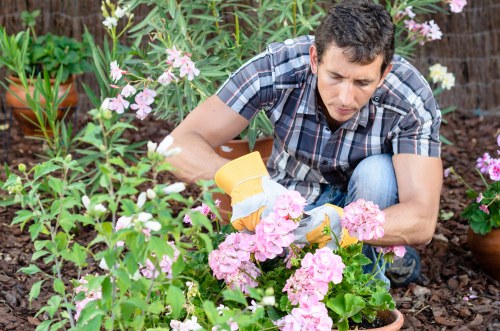 The borough's approach to waste separation influences our systems. Leyton is part of a wider borough strategy that encourages residents to separate food waste, garden waste, glass, paper and plastic at the kerb. We mirror that separation in our depots so material can move directly into existing municipal streams or local reuse partners without cross-contamination. This alignment improves downstream processing and supports the council's recycling targets while cutting the carbon footprint of disposal operations.
Local transfer stations and resource hubs
We coordinate collections to nearby local transfer stations and municipal recycling centres to keep journeys short and processing efficient. Materials that cannot be repurposed on-site are taken to designated transfer stations where they enter authorised recycling channels. Our logistics plan lists primary and fallback transfer points in the borough and adjacent districts so Garden Leyton waste is always handled responsibly. Minimising double handling is central to keeping carbon emissions low.
 Partnerships are fundamental. We work with neighbourhood charities, community allotments and social enterprises to divert useful materials: wood goes to a local furniture reuse group; surplus soil and mulch is shared with community gardens; and potted plants or good-quality pots are offered to charitable projects. Our collaborations include small reuse centres and volunteer-run green spaces that help turn waste into value while supporting local social goals.
Practical on-site policies include a simple bin matrix and a staff training programme that clarifies what goes where. A short list of key recycling actions we enforce:
- Segregate green waste (grass, prunings, leaves) into composting bays.
- Collect untreated timber separately for reuse or biomass processing.
- Keep soils and aggregates separated from organic streams for reuse.
- Bag small mixed waste only when no recycling option exists, to reduce contamination.
Low-carbon transport and circular logistics
Our commitment to a sustainable rubbish gardening area extends to transport. Gardening Leyton operates a fleet of low-carbon vans — including electric and hybrid vehicles — supplemented by cargo bikes for short, local collections. Route optimisation software reduces mileage, and load consolidation sends full lorries to transfer stations rather than many half-empty trips. These choices reduce emissions and reinforce our overall sustainability targets.
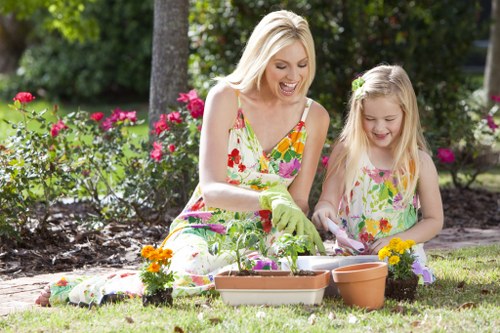 We also invest in equipment and infrastructure that supports circular reuse: covered compost bays, drying areas for reclaimed wood, and secure storage for items destined for partner charities. To close the loop many projects on-site use compost and mulch produced from local green waste, returning nutrients to planting beds and lowering the need for external inputs. Where possible, surplus materials are scheduled for collection by partners rather than being sent to disposal.
 H3>
H3>
Community engagement, measurement and continual improvement
Community engagement is a core pillar: volunteers and local groups help run swap events, plant exchanges and reuse fairs that keep reusable items in circulation. We publish quarterly performance summaries and invite partners to review progress toward the recycling percentage target. Continuous improvement workshops examine contamination issues, ways to increase reuse rates and new technologies for low-carbon processing.Gardening Leyton seeks to be a model for neighbourhood-scale sustainable gardening waste management — an eco-friendly disposal area that reduces landfill, supports local charities and uses low-carbon vans and smart logistics. By aligning with the borough approach to waste separation and by partnering with transfer stations and community organisations, we turn garden rubbish into resources, strengthen local green infrastructure and build resilient, regenerative neighbourhoods.
Our combined strategy — clear targets, smart sorting, local transfer stations, charity partnerships and a low-emission fleet — creates a pragmatic, measurable path to becoming a leading sustainable gardening and recycling hub in Leyton. We continue to refine operations, share learning with neighbours, and prioritise solutions that deliver environmental and social benefits together.
Long-term, Gardening Leyton aims to exceed the borough recycling ethos by increasing reuse, diverting more material from landfill and achieving the 65% recycling target by the defined timeframe. Through collaborative action and steady innovation our eco-friendly waste disposal area will remain a practical example of how local gardening activity can support a circular, low-carbon future.